
To hold a screen door open, support the door, slide its hold-open washer against the closer cylinder, and ease the door back until the washer takes the closing load. To release it, hold the door and open it slightly farther to relieve that load, then slide the washer away from the cylinder before guiding the door closed.
A washer carrying the door’s closing load can feel stuck even when it is working correctly. Unload it before trying to slide it. Pulling harder on the washer—or pulling the door shut against it—skips the movement that makes release possible.
These instructions cover the small manual washer on an exposed closer rod. Follow your closer’s instructions if its washer has a different operating arrangement.
Identify the Washer and Make Room to Control the Door
Choose a holding position that leaves a little opening travel available for release. Setting the washer with the door already against its opening limit can leave you unable to relieve its load by reopening the door.
Find the small metal washer or tab that slides along the exposed rod near the cylinder. It is separate from the adjustment screw and the pins connecting the closer to its brackets.
Before touching it, make sure you can hold the door steadily while reaching the rod. Clear objects from the swing path and keep other people from moving through the opening during the operation. Keep fingers away from the hinge edge and the contact point between the washer and cylinder.
Routine operation requires no tools. If you are reaching for pliers or a screwdriver to move the washer, pause and check whether the door is still loading it.
Wait if gusts are pulling the door out of your control. The washer should not be relied on to restrain a wind-driven door, and forcing the door farther open to gain working room can load the closer and its attachments.
Set the Washer Against the Closer Cylinder
Transfer the closing load gradually so you can feel whether the washer has engaged. Keep control of the door until it holds without continuing to move.
- Open the door to the position you need and keep holding it. Stay within its normal travel and leave room to reopen it slightly later. Check that the door is not pressed against an obstruction or its opening limit.
- Slide the washer toward the cylinder’s rod-entry end. Move it along the exposed rod until it meets the cylinder. Supporting the door first keeps closing pressure from interfering with positioning. Do not move mounting pins or turn the adjustment screw.
- Ease the door back gently. This transfers the closing load onto the washer so it can engage. Avoid releasing the door abruptly; you should feel whether the washer takes the load without allowing a sudden swing.
- Confirm that the door holds before removing your hand. Keep a hand ready at the door while checking for continued movement. If the washer slides and the door follows it, regain full control rather than repeatedly dropping the door back against it.
The washer does not need to be tightened like a nut. Its contact with the cylinder and grip on the rod create the hold. Washer shapes vary, so do not copy a particular tab angle from a different closer or bend yours to resemble it.

Open the Door Slightly Before Sliding the Washer Back
Take the closing pressure off the washer before repositioning it. The small reopening movement is what allows an engaged washer to become movable again.
- Take a firm, comfortable hold of the door. Be ready to control its movement when the washer stops holding. Do this before reaching for the washer, rather than depending on it to remain engaged while you change your grip.
- Open the door slightly farther within its available travel. Move only enough to relieve pressure at the washer-to-cylinder contact. There is no universal release distance. If the door meets a firm limit, do not push harder to create extra travel.
- Slide the unloaded washer away from the cylinder. Move it toward its resting position along the exposed rod, following the closer’s instructions where provided. Slight reopening unloads a manual washer; you still need to move it clear. If it remains resistant, stop instead of prying.
- Move your fingers clear and guide the door as closing resumes. Keep control while checking that the washer no longer holds against the cylinder. Do not pull the door shut against a washer that is still engaged.
Watch the first part of the closing movement. If the washer catches again, take control and unload it before repositioning; do not try to overcome the catch by pulling the door harder.
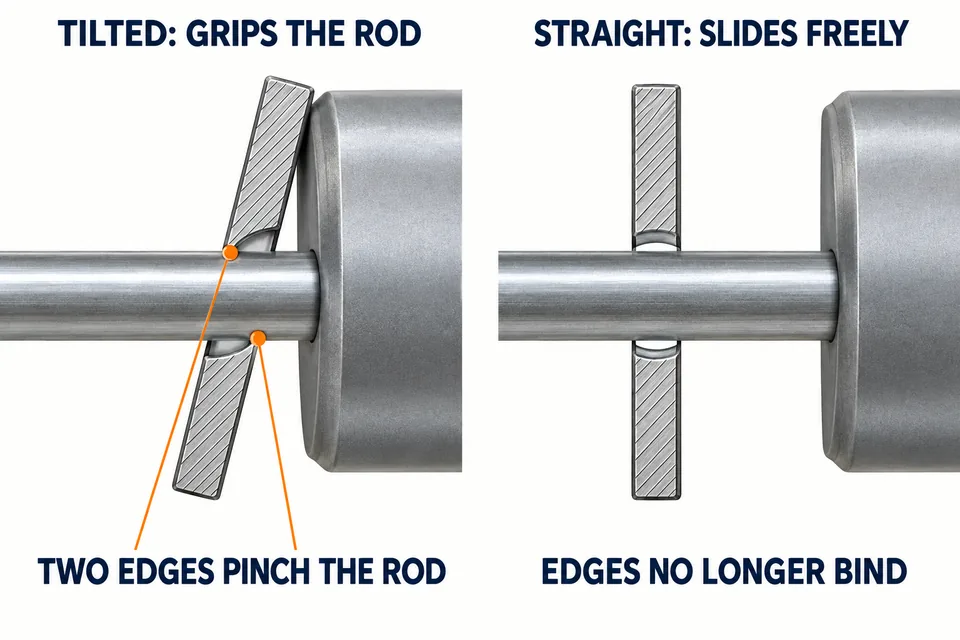
Stop if the Washer Still Binds or Will Not Hold
Resistance that remains after unloading is a reason to stop. So is a washer that keeps slipping despite careful positioning.
If the washer slips during engagement, hold the door and relieve the load before checking its position again. On visibly intact hardware, one careful repositioning attempt is reasonable. Do not keep letting the door fall back to see whether the washer eventually catches.
Do not bend the washer with pliers, file the rod, remove mounting pins, or apply lubricant as an assumed cure. These actions change the hardware or its gripping conditions without establishing why it is resisting.
Look for obvious signs that operation should stop: a distorted washer, visible rod damage, or an attachment that moves as you handle the door. If you notice a bent closer rod or bracket, treat that as a separate hardware problem.
If the door has no available opening movement to unload the washer, do not force it farther. Keep control of the door and consult the instructions for the exact closer or obtain help with releasing it.
Check One Complete Hold-and-Release Cycle
A successful hold is only half the check. The washer must also move clear and stay out of its holding position as the door closes.
Observe a complete cycle under control: use the washer to hold the door, unload and move it clear, then allow normal closing while remaining ready to catch the door.
- The washer holds the chosen position without continuing to slip.
- It moves clear after you support and slightly reopen the door.
- The door resumes closing without the washer catching again.
If the washer is clear but the closer still stops before the door shuts, the remaining symptom needs a separate check. Re-engaging the washer or pulling harder will not establish the cause.
Larson’s overview of storm-door components identifies hold-open washers as a closer feature; use your exact closer’s operating instructions for any model-specific details.
The finishing standard is straightforward: the washer holds when deliberately set and releases without tools once unloaded. If either action requires force, stop using the feature until the resistance or slipping is understood.