
A sliding screen door can travel from end to end while producing a rattle, grind, or low rumble that was not there before. The useful distinction is not how loud the sound is. It is whether the sound follows the door, repeats with wheel rotation, or returns at one fixed place in the track.
Those patterns point to different mechanisms. Rattling usually involves intermittent movement between parts. Grinding suggests sustained contact, while a steady rumble more often comes from a rotating wheel or an uneven rolling surface. Moving the door slowly enough to locate the sound should come before cleaning, lubricating, or adjusting anything.
The Likely Causes of Rattling, Grinding, Or Rumbling During Travel
Classify the sound by how it behaves, not by the name that first comes to mind. Lightweight aluminum and vinyl screen-door frames have some normal movement within their channels, so a brief vibration is not automatically a defect. A new mechanical sound or one that has become more pronounced usually means the contact pattern has changed.
Rattling often comes from a part that can move independently of normal door travel. An accessible handle screw may have loosened, a frame corner may have developed play, or the door may be shifting sideways between its upper and lower guides. The sound may become quieter when an accessible frame edge is lightly stabilized.
Grinding indicates more continuous contact. Possible sources include a roller rubbing its housing, the lower frame touching the rail, compacted grit under a wheel, or one damaged section of aluminum track.
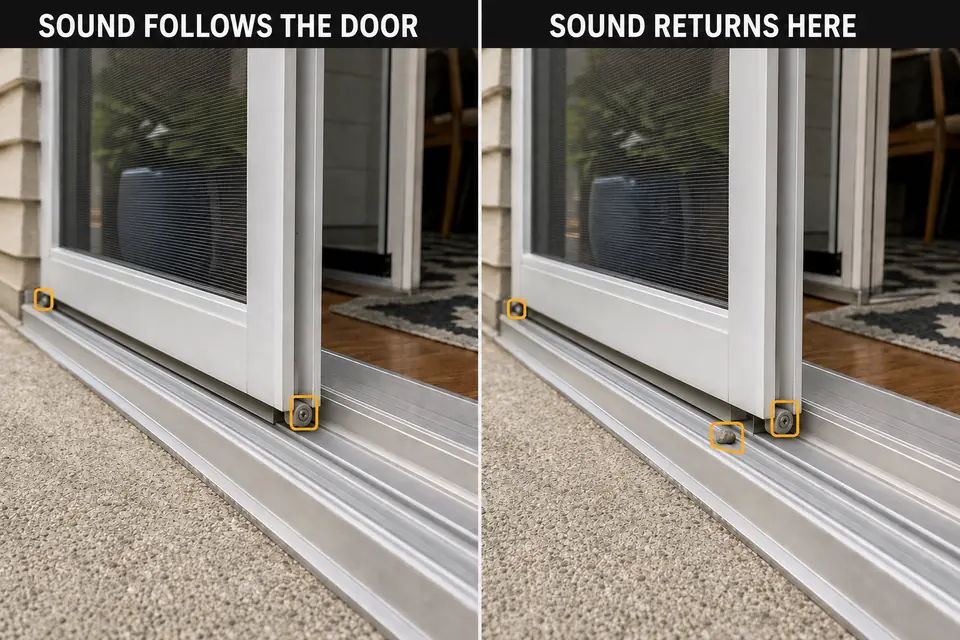
When the Sound Follows the Moving Door
A rumble that travels with the door and repeats in a steady rhythm points toward a rotating component. A worn wheel, flat spot, loose axle, or debris embedded in the roller can produce a repeating vibration. The rhythm normally speeds up and slows down with the door.
A scrape that also follows the door is more consistent with one door component remaining too close to the track. Look for a polished line, dark rub mark, or fine metallic material around the lower frame and roller positions.
When the Sound Returns at One Track Location
A short crunch or grind that occurs at the same place during both opening and closing belongs more convincingly to that section of track. Loose grit, hardened residue, a small stone, or localized rail damage can all produce this pattern.
Warning Sign: Stop testing if the door produces metal shavings, meets a sharp catch, visibly deforms at the contact point, or has a roller that no longer carries its corner. Repeatedly forcing it through can turn a small contact point into track or frame damage.
Checks to Make Without Removing the Entire Assembly
The safest useful test is one slow, repeatable pass with the door still contained in both channels. Work in daylight, keep fingers and loose clothing away from the upper and lower pinch areas, and avoid lifting the assembly during the first check.
Open the screen slowly and note where the sound begins and ends. Then close it at the same speed. A small piece of removable painter’s tape beside the suspected location can provide a reference, but it should not cross the roller path.
Now separate the moving part from the fixed location. If different portions of the door pass over one point while the sound remains there, inspect the track. If the noise travels across the opening with the same door corner or roller position, concentrate on that component.
Lightly stabilize the handle stile or another accessible frame edge while someone moves the door slowly. If the rattle changes immediately, frame play, accessible hardware, or excessive guide clearance is more plausible than debris under the wheel. A sound that occurs in only one direction may also indicate that the lightweight frame shifts as the load changes.
How to Separate Alignment, Wear, Debris, and Installation Causes
Do not assign a cause until the sound pattern agrees with a second clue. The strongest diagnosis combines location or rhythm with a rub mark, visible residue, wheel instability, loose hardware, or a sound that changes when the frame is stabilized.
Alignment Contact
Alignment is the stronger lead when the same corner or lower frame section scrapes through much of the opening. A persistent low corner, uneven frame position, or fresh contact line supports that conclusion. If the sound exists only at one short track point, alignment alone is less convincing.
Roller Wear
Roller wear commonly produces a repeating rumble, click, or rough grind that follows the door. A flat spot can create a regular pulse; a loose wheel or axle may add a rattle when the load shifts. If the noise stays with the same roller position after the visible running path is clear, more cleaning is unlikely to solve it.
Debris or a Fixed Track Obstruction
Debris is more likely when the sound is brief and returns at exactly the same location in both directions. Inspect for sand, small stones, leaf fragments, or hardened residue along the wheel path.
Remove only clearly loose surface material during diagnosis. When bonded residue occupies the running line, use the controlled process for cleaning a sliding screen door track after winter instead of soaking the channel or pushing debris into a hidden corner.
Loose Installation Contact
Installation-related rattling often changes when an accessible handle, stile, fastener, or upper guide area is stabilized. This does not prove that the entire door was installed incorrectly. One loose connection or excessive movement at a frame corner can create noise while the door continues to travel normally.

Mini Decision Matrix
- Sound follows the door: Inspect the corresponding roller, frame corner, handle, and guide.
- Sound repeats with rotation: Look for a flat spot, wheel wobble, axle play, or wheel-to-housing contact.
- Sound returns at one track point: Inspect that location for grit, hardened residue, or visible track deformation.
These branches identify the next inspection target; they do not prove a cause from sound alone. Make a correction only after the matching physical clue is visible.
The Lowest-Risk Correction to Try First
The first correction should remove the confirmed contact without changing the rest of the door. Clear visible loose grit from a repeatable sound point, or secure an accessible handle or frame fastener only when its movement has been confirmed. Do not tighten lightweight frame parts until they distort.
When one lower frame area remains too close to the rail and there is no visible wheel or track damage, a small height correction may be appropriate. Record the original screw position and follow the dedicated procedure to adjust the sliding screen door rollers. Change one side only when the diagnosis supports it, then retest.
Common Mistakes
- Do not spray lubricant over dirt or hardened residue; it can hold abrasive material in the wheel path.
- Do not change both roller adjustments before testing; that erases the starting reference and may create a second alignment problem.
A rhythmic rumble that remains with one wheel after the track is clear points beyond cleaning. A visibly damaged wheel, loose axle, or wheel rubbing its housing may require roller service or replacement rather than further adjustment.
Likewise, do not silence a sharp fixed-point grind by raising the entire door until it clears damaged metal. If the confirmed contact point contains a short visible bend, crack, or crease, follow the repair boundaries for a bent sliding screen door track instead of compensating for the damage elsewhere.
How to Test the Screen or Door After Each Change
Retest the original sound—not merely the general feel of the door. Make one correction, then repeat the same slow opening and closing pass. Compare the sound’s location and rhythm as well as its volume.
Run the door through several normal passes without slamming it. Confirm that the frame remains reasonably level, both channels continue to contain it, and no new rubbing appears near the latch side or upper guide. If the sound moves to another location, reassess the last change rather than chasing it with another adjustment.
If the clean track still produces a rumble that follows the same roller, wheel wear remains the stronger lead. If the same lower corner continues to scrape while the opposite side travels freely, continue with the diagnosis for a sliding screen door that drags on one side instead of making broader adjustments.
Stop if testing produces a sharper catch, metal particles, unstable roller contact, or loss of channel containment. Otherwise, the useful success standard is specific: the sound disappears at its original location, remains absent through repeated passes, and no new contact appears elsewhere.
For a manufacturer example of checking screen rollers after clearing the track, see Andersen’s gliding insect screen roller guidance.